
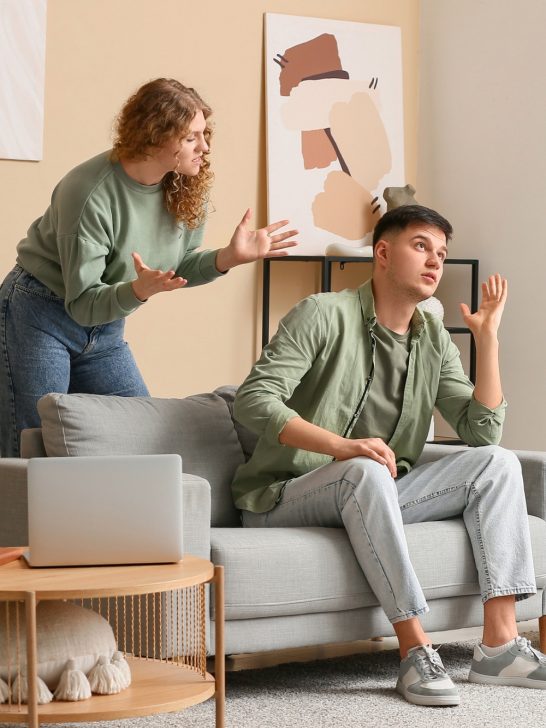
I don’t think you need to read many articles to recognize an aggressive husband because an aggressive husband is usually easy to spot.
He raises his voice, lashes out, says hurtful things, and makes his anger known to everyone within a five-kilometer radius.
But a passive-aggressive husband is a lot harder to identify.
In fact, many women spend years feeling emotionally exhausted before they realize what they’re dealing with because passive aggression hides behind indirect behavior.
Here are some signs your husband may be passive-aggressive.
6 Signs Your Husband is Passive-Aggressive
1. He says “I’m fine” when he’s clearly not

As women, I think we are the undisputed queens of saying “I’m fine” when our faces are practically breathing fire.
Men can do it too.
Sometimes a husband needs time to process his feelings before discussing them.
But a passive-aggressive husband isn’t silent because he needs space.
He’s silent because he wants you to feel the punishment.
You ask what’s wrong, and he says, “I’m fine.”
But he’s moving around the house like a disgruntled landlord.
He expects you to figure out what’s wrong while continuing to deny that anything is wrong.
So now you’re walking around your own house, trying to solve a mystery nobody will give you any clues about.
A healthy husband eventually tells you why he’s upset.
A passive-aggressive husband tells you he’s fine, and then spends the next three days making sure you know he’s absolutely not.
If you’ve ever had to drag an explanation out of a grown man like you’re conducting a police interrogation, you know exactly how exhausting that can be.
2. He agrees to things and then deliberately drags his feet
I know that sometimes husbands promise things simply because they want peace to reign in the home.
Some men genuinely forget, some are busy, and some underestimate how long a task will take.
That’s not necessarily passive aggression.
A passive-aggressive husband doesn’t want to do the thing, but he also doesn’t want to have the uncomfortable conversation of saying no.
So instead of refusing directly, he resists indirectly.
He agrees and promises, but doesn’t do anything.
The issue isn’t always the task itself.
The problem is that procrastination has become his way of expressing disagreement without saying it outright because avoiding the task is easier than addressing the real issue.
But for you, it is maddening because you’re dealing with someone whose words and actions never match.
A husband who doesn’t want to do something should just say so.
You may not like the answer, but at least it’s honest.
What wears a marriage down is when “yes” secretly means “absolutely not, but I’m not going to tell you that.”
3. His sarcasm always has a sharp edge

Sarcasm is often a sign of intelligence.
I enjoy it, my husband enjoys it.
Many couples tease each other and have inside jokes that would sound completely ridiculous to outsiders.
There is nothing wrong with playful sarcasm when both people are laughing.
Passive-aggressive sarcasm here isn’t really about humor.
Since a passive-aggressive husband rarely says exactly what he means, he packages criticism as a joke and then acts surprised when you’re hurt.
For instance, you make a mistake, and he says, “Well, that was genius.”
And when you react, he immediately retreats behind the oldest defense in the book, “I was only joking.”
Jokes are supposed to make people laugh.
If one person is always laughing while the other is always wounded, you’re not dealing with humor but with criticism that lacks the courage to be direct.
Passive-aggressive people use sarcasm to create plausible deniability.
They can say something hurtful and then hide behind the fact that it was “just a joke.”
That way, they never have to take responsibility for the sting behind their words.
4. He makes you feel guilty instead of expressing his needs
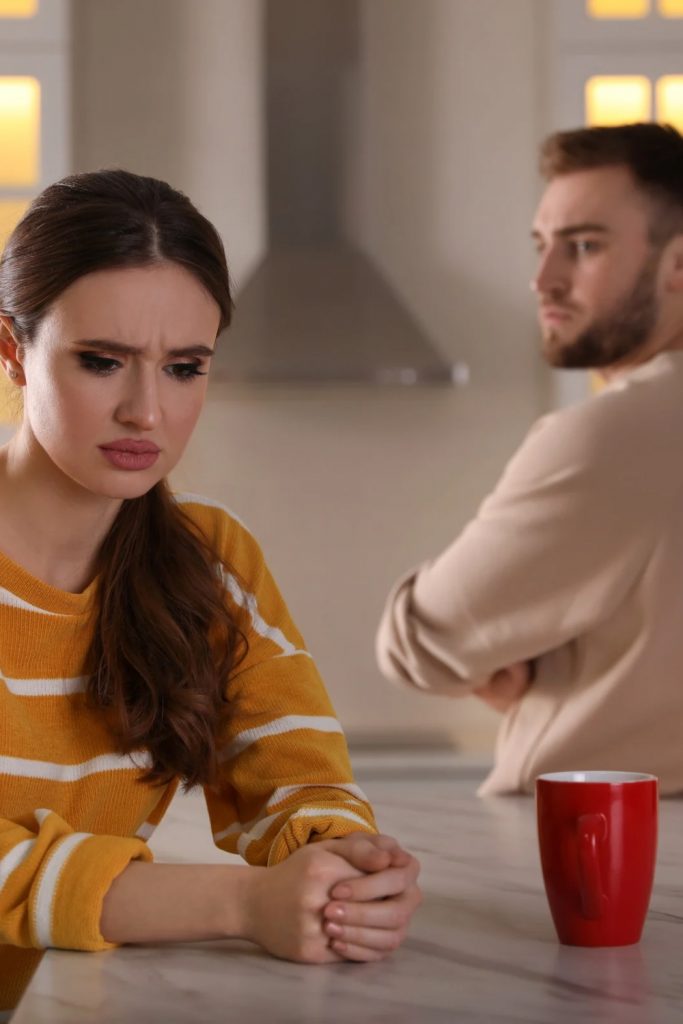
You’d think being an adult means you can communicate your needs directly.
Apparently not.
One of the most exhausting things about dealing with a passive-aggressive husband is that he expects you to understand what he wants without him saying it.
Instead of telling you what he’s feeling, he starts serving you guilt for breakfast, lunch, and dinner.
Maybe you ask if he’s okay, then he sighs dramatically and says, “Don’t worry about me.”
Tell him you’re going out with friends.
You’ll hear, “It’s fine. Have fun. I’ll just be here.”
The frustrating part is that he never asks for what he needs.
Instead, he drops emotional breadcrumbs and expects you to follow them back to the problem.
Before long, you find yourself feeling guilty for things you didn’t even know were upsetting him.
Nobody should have to earn a degree in mind-reading just to keep peace in their own home.
5. He secretly keeps score
When you offend a passive-aggressive husband, just know you’re in trouble.
Even if you’ve talked about the issue, apologized, and you’ve had makeup sex and spent the weekend acting like newlyweds.
A passive-aggressive husband never truly lets it go!
Every offense is archived for future use.
You may think a disagreement from six months ago has been resolved until, one random day, you hear, “That’s how you embarrassed me in front of my sister last December.”
Excuse me, sir. How did we get here?
That’s because passive-aggressive people keep a mental record of every real and perceived slight.
Instead of addressing issues and moving on, they collect them like souvenirs.
6. He sabotages things when he’s upset

No matter how upset a husband is, there are certain things he should never do.
One of them is deliberately sabotaging things simply because he’s angry.
Instead of a passive-aggressive husband, saying, “I don’t like this idea,” he will find subtle ways to throw sand into the engine.
For example, if you both agreed to attend an event together, he will spend the entire day acting miserable and uncooperative.
He supports your plans verbally but will keep making little comments that drain all the excitement out of them.
And when you confront him, he’ll deny doing anything wrong.
After all, he showed up and didn’t oppose you, but his actions tell a different story.
You don’t have to agree with your spouse on everything.
My husband and I certainly don’t, but once a decision has been made, intentionally trying to make things harder because you’re upset helps nobody.
In fact, it’s childish.
The reason passive-aggressive husbands sabotage is that they want to express anger without taking responsibility for expressing anger.
So they create obstacles and frustration until everyone around them feels the tension.
It’s easier to identify and even run away from an aggressive husband because at least you know what you’re dealing with.
The problem with a passive-aggressive husband is that he creates confusion.
You’re upset, but you’re never sure why.
Even when you feel punished, he insists he hasn’t done anything.
Before you know it, you’re questioning your own instincts.
Passive aggression is not harmless.
Unfortunately, many people dismiss it because there are no shouting matches or bruises.
But a marriage can be destroyed just as much by what remains unsaid as by what is said.
A good husband doesn’t have to communicate perfectly.
What matters is the willingness to talk about problems openly rather than express them indirectly.
The goal of marriage isn’t to punish your spouse when you’re hurt, but to help them understand why you’re hurt so the two of you can work through it together.
And that becomes almost impossible when one person keeps speaking in emotional riddles while expecting the other person to solve the puzzle.